About the Company
A pioneering Seattle-based company disrupting the edge computing landscape. They have successfully secured multiple rounds of funding to drive innovation in the rapidly evolving field of edge computing. This forward-thinking company specializes in harnessing advanced technologies to optimize real-time data processing and analysis at the network's edge, providing businesses with faster, more efficient data insights and improved operational performance.
Problem Statement
The client faced several significant challenges in their surveillance operations:
- Real-time Anomaly Detection: Identifying changes in behavior and unusual patterns within streaming surveillance video was critical. Traditional methods were insufficient for real-time processing and often resulted in delayed or missed detections.
- Accurate Event Reporting: The need to accurately report events detected in the video streams posed a challenge. Each event required precise documentation to ensure clarity and utility in subsequent reviews.
- Efficient Data Management: Managing and storing vast amounts of video data, while ensuring it remained easily accessible for future reference, was a logistical challenge. The client needed a solution that could efficiently handle this data without overwhelming their storage infrastructure.
The Solution
To address these challenges, we developed a comprehensive AI-based anomaly detection system with the following key features:
- Advanced Machine Learning Algorithms: We utilized state-of-the-art machine learning models trained to recognize unusual patterns and behaviors in real-time. These models were deployed on edge devices to ensure rapid processing and immediate detection.
- Scene Description Conversion: The system not only detected anomalies but also converted the relevant portions of video into detailed scene descriptions. This provided context and clarity to the detected events, making it easier for stakeholders to understand the nature of each incident.
- Video Clip Storage: Short video clips corresponding to each detected event were saved along with their descriptions. This approach allowed for efficient storage and easy retrieval, ensuring that important footage was readily available for review without consuming excessive storage space.
- Surveillance Report Generation: We developed a robust reporting system that compiled all detected events and their descriptions into comprehensive reports. These reports classified events based on their importance, helping the client prioritize responses and actions.
Details
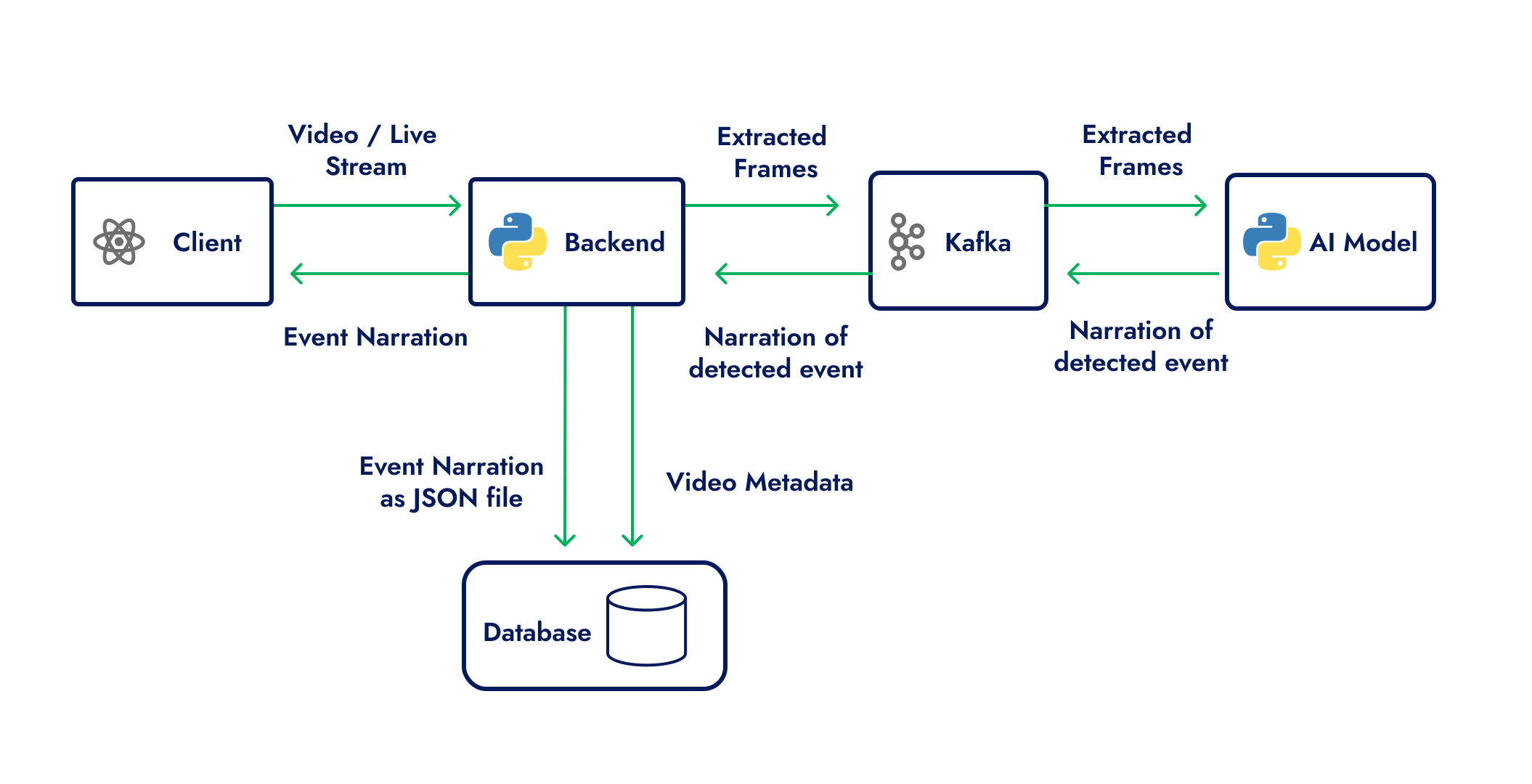
Video Upload (Frontend App)
Users upload video files through the frontend application, developed using React with TypeScript. The frontend app initiates the upload to a Kafka topic for processing.
Kafka Topic
Kafka receives the video file uploads from the frontend app. Kafka ensures efficient streaming and queuing of video data for real-time processing.
Backend Processing
The backend, built with Python Django, retrieves video files from the Kafka topic. The backend extracts frames from the video files to prepare for anomaly detection.
Anomaly Detection (AI Model)
Extracted frames are sent to the AI model, implemented in TensorFlow (Python). The AI model processes the frames to detect anomalies and generate event narrations.
Event Narration
Detected event narrations are sent back to the backend. The backend compiles the narrations and associates them with the corresponding video metadata.
Data Storage
Event narrations are stored in JSON format and video metadata are stored in a database. These are saved in blob storage and a database respectively for future retrieval and analysis.
Narration Feedback to Frontend App
The backend sends the event narrations back to the frontend app via Kafka. Users can view the narrations in the frontend application, gaining insights into detected anomalies.
Surveillance Report Generation
The backend generates comprehensive surveillance reports based on the stored event narrations and video metadata. Reports classify events by their significance, helping prioritize responses and actions.
The Benefits
The implemented AI solution yielded significant benefits for our client, transforming their surveillance operations and delivering a measurable impact on their security posture.
Security & Reduced Risks
Real-time anomaly detection with intelligent scene descriptions empowered security personnel to proactively identify and respond to threats, minimizing potential security breaches.
Improved Operational Efficiency
Eliminating the need for constant human monitoring through edge-based processing and automated reporting freed up valuable manpower for strategic initiatives.
Reduced Costs
The combination of unmanned monitoring and streamlined data storage significantly reduced the operational costs associated with traditional surveillance methods.
Actionable Insights
Systematic logging of events with clear video clips and prioritized reporting provided a wealth of data for analysis, enabling data-driven security strategy improvements.
Our AI-powered solution provided the client with a proactive, cost-effective, and data-driven approach to security. They gained the ability to mitigate risks, optimize resource allocation, and make informed decisions based on real-time insights — all crucial factors in maintaining a secure environment.